
How to Cultivate Wonder in Your Homeschool



A child can complete every assignment and still never really connect with what they are learning.
That sentence may make us pause, and it should.
Completion matters. Skills matter. Discipline matters. We want our children to read well, write clearly, calculate accurately, think critically, and follow through when something is difficult.
But if our homeschool becomes only about finishing the next lesson, checking the next box, or getting through the next page, our children may start to believe learning is something to survive instead of something to pursue.
That is why it matters to cultivate wonder in your homeschool. Not as one more thing to do, but as a way to help your children care about what they are learning.
Wonder Is Not Fluff
Wonder is not the opposite of serious education. In many ways, it is what helps serious education take root.
A curious child has a reason to read.
A curious child has a reason to write.
A curious child has a reason to investigate.
A curious child has a reason to measure, compare, observe, research, discuss, test, sketch, build, and try again.
Wonder gives skills somewhere to go.
Curiosity Gives Children a Reason to Care
When a child wants to know why bread rises, yeast is no longer just a vocabulary word in a science book. It is alive and bubbling in a bowl on the kitchen counter.
When a child wants to know how a ship disappeared, geography, weather, navigation, history, and human decision-making begin to connect.
When a child wants to know why vinegar bubbles on a seashell, chemistry is no longer trapped inside a textbook. It is fizzing right in front of them.
When a child wants to know how birds find their way home, science, design, migration, maps, and mystery all come together.
This is what curiosity does.
It gives children a reason to care.
And when children care, they pay attention differently.
They listen for the next part of the story.
They read because they want to know what happened.
They write because they have something to say.
They measure because accuracy matters to the thing they are building.
They observe because they are trying to figure something out.
They ask another question because the first answer opened a door.
That kind of learning is not flimsy. It is not shallow. It is not a break from education.
It is education with the lights turned on.
You Do Not Have to Abandon Curriculum, Structure, Discipline, or Routine
When we hear words like wonder, curiosity, delight, or hands-on learning, we may picture elaborate projects, expensive supplies, themed weeks, perfect nature journals, beautiful art trays, and a mom who somehow has time to turn every lesson into an event.
This is where many homeschool moms get nervous.
That is not what this is.
You do not have to abandon curriculum, structure, discipline, or routine.
You simply learn to become what I like to call the curiosity coordinator in your home.
A curiosity coordinator does not have to know all the answers.
She does not have to be the expert.
She does not even have to make everything exciting.
She notices.
She listens.
She asks.
She connects.
She gives curiosity a place to grow.
She gives curiosity time to grow.

When a child asks a question, you do not always have to stop everything and build a full lesson around it. But you can treat the question like it matters.
You can say, “Let’s find out.”
You can pull a book from the shelf.
You can look up a picture.
You can grab a map.
You can test it in the kitchen.
You can take the question outside.
You can ask, “What do you think is happening?”
You can say, “How could we investigate that?”
You can give curiosity a next step.
That is the difference between simply acknowledging a question and helping a child become the kind of person who knows what to do with one.
When something sparks interest, look for a small way to follow it.
- A book.
- A map.
- A short video.
- A library search.
- A kitchen experiment.
- A nature walk.
- A sketch.
- A conversation.
- A field trip.
- A notebook page.
- A simple question at lunch.
- A quick test to see what happens.
That is enough to begin.
Pique Interest Before Asking for Output
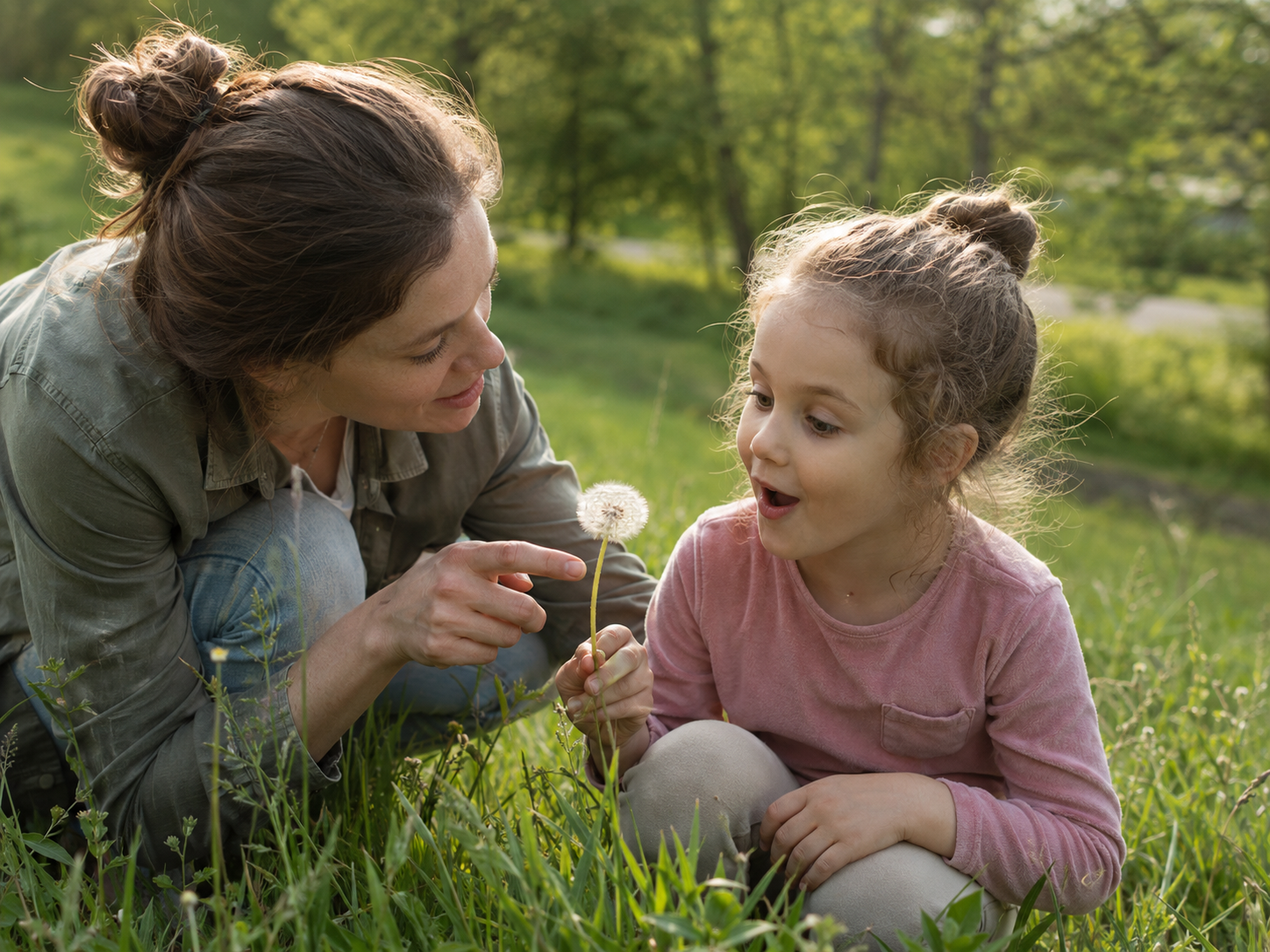
One of the simplest ways to bring wonder into your homeschool is to pique interest before asking for output.
Before asking a child to write about a topic, help them care about it.
Before handing them a worksheet, let them see why the idea matters.
Before requiring a summary, give them something worth summarizing.
Before asking for answers, invite them to notice, wonder, and connect.
This does not have to take long.
Show a strange picture.
Put an object on the table.
Ask, “What do you think happened here?”
Tell a short story from history.
Read the first paragraph of a biography.
Demonstrate something surprising.
Let them predict what will happen.
Ask what they already know.
Ask what they wonder.
Give them a mystery.
Children are often more willing to do the work when they have a reason to care.
A child who is curious about sharks will read more carefully.
A child who wants to know whether a seed will sprout in darkness will observe more closely.
A child who wants to build a bridge that will not collapse will measure with more purpose.
A child who wants to explain a mystery will write with more ownership.
Curiosity does not remove the need for effort. It often gives effort a reason.
Small Wonder Counts
We sometimes make wonder too complicated.
We think it has to be a full unit study, a long project, or a whole afternoon.
But wonder can fit into ordinary homeschool days in small ways.
Ask one more question.
Read one extra page.
Look up one word.
Find one place on a map.
Sketch one thing you noticed.
Compare two leaves.
Double a recipe.
Watch ice melt.
Test which paper airplane flies farther.
Listen to a bird call.
Look at the moon.
Read about the person behind the invention.
Let your child explain what surprised them.
Keep a running list called “Things We Wonder.”
Choose one question each week to explore a little further.
That is not overwhelming. That is a rhythm.
A few minutes of wonder, repeated over time, can change the tone of a homeschool.
It tells your children their questions matter.
It tells them the world is worth noticing.
It tells them learning is not locked inside a textbook.
It tells them curiosity belongs here.
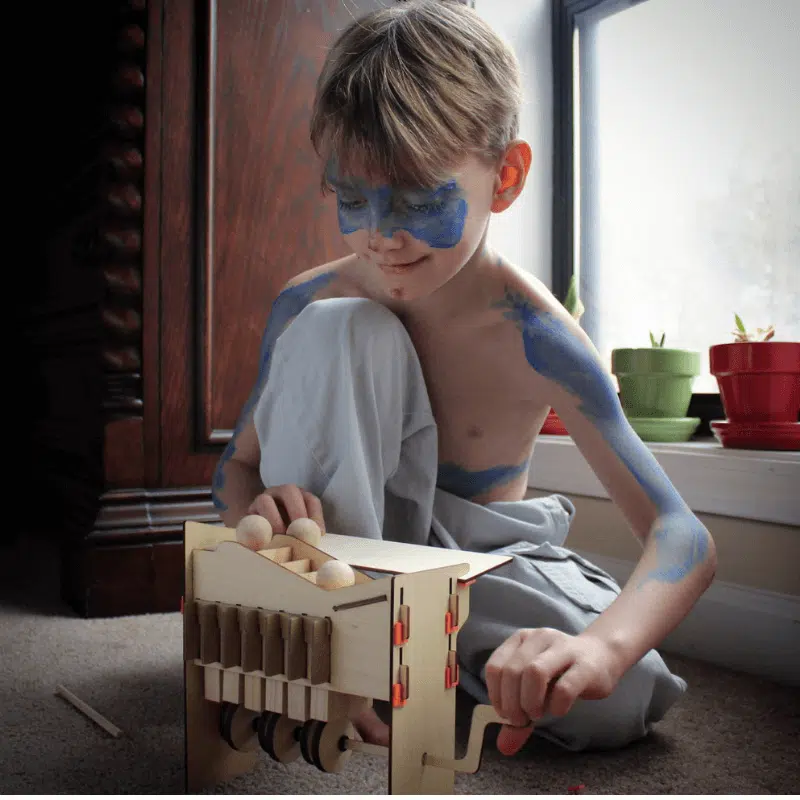
Use What You Already Have to Cultivate Wonder in Your Homeschool
Wonder does not require starting over.
It can grow right beside the curriculum you already use, the books you already own, the plans you already made, or the questions your children are already asking.
The key is to look for the doorway.
You do not have to start over to cultivate wonder in your homeschool. You can begin with the lesson, book, topic, or question already in front of you.
If your science book is teaching about weather, don’t just say, “Let’s track the clouds.” Start with something that makes them curious.
- Why can the sky look calm in the morning and stormy by afternoon?
- What do animals do before a storm?
- Why do some clouds look soft and harmless while others look heavy enough to break open?
- Can we predict tomorrow’s weather by watching the sky today?
Then go outside. Watch the clouds. Feel the air. Notice the wind. Check the forecast. Compare what you observed with what happened.
If your history lesson mentions a battle, a journey, or a civilization, don’t just pull out a map. Give them a problem to solve.
- How far did they have to travel?
- What would that journey feel like without cars, GPS, grocery stores, or air conditioning?
- Where would you stop for water?
- What would make this route dangerous?
- What choice changed everything?
Now the map matters.
If your literature assignment introduces a new place, don’t only find a picture of the landscape. Ask what that place would feel like.
- What would you hear there?
- What would the air smell like?
- What would be beautiful?
- What would be hard?
- How would the story change if it happened somewhere else?
Now the setting is not just background. It becomes part of the story.
If math feels dry, don’t force a connection just to make it cute. Give math a job.
- Can we double this recipe without ruining it?
- How much paint would this wall need?
- Which package is actually the better deal?
- How tall is that tree if we use its shadow?
- Can we build this stronger, cheaper, or more evenly?
Now math is doing something. It is showing up in unexpected ways that might just pique their interest.
If Bible time brings up a word, place, feast, custom, or question, pause to let it become real.
- Where is that place?
- What would it have looked like?
- Why did that word matter?
- What would this have meant to the people who first heard it?
- What does this show us about God, people, obedience, worship, or remembrance?
Now you are not just reading past the details. You are helping your children notice them.
You do not have to throw out the plan to make room for wonder.
You can weave wonder into what is already in front of you.
That is often the most sustainable way to do it.
We are not trying to create a homeschool that depends on constant novelty. We are trying to cultivate children who know how to look more closely.

Let Conversations Do Some of the Work
Curiosity grows through conversation.
Sometimes we rush too quickly to the worksheet, the quiz, or the written response when a conversation would tell us so much.
Ask your children:
- What did you notice?
- What surprised you?
- What do you think that means?
- What does this remind you of?
- What would you ask if you could talk to that person?
- How would you explain this to someone younger?
- What do you still wonder?
These kinds of questions help children process what they are learning. They also help us see what they understand, what they missed, and what caught their attention.
There is a place for written work. There is a place for tests (maybe). There is a place for memory work, practice, narration, review, and accountability.
But conversation is one of the most natural tools we have as homeschool parents and probably the most overlooked.
It lets us hear their thinking.
It lets us guide without turning everything into a grade.
It lets us discover whether the lesson became something more than a completed page.
Your child’s questions may show you where wonder is trying to grow.
This Is the Heart Behind Labs of Wonder
This is exactly why I created Labs of Wonder.
I wanted families to have a way to take a question, mystery, topic, historical event, nature find, recipe, place, person, or idea and turn it into meaningful learning without overcomplicating it.
A Lab of Wonder is not about doing more for the sake of doing more.
It is about giving curiosity a path.
- Ask.
- Notice.
- Read.
- Investigate.
- Make.
- Write.
- Share.
- Wonder again.
That simple rhythm can turn a spark of interest into something deeper. It gives children a way to explore while also providing parents with enough structure to keep learning purposeful.
Because wonder does not mean wandering aimlessly forever.
Wonder invites us to look closer.
To ask more thoughtful questions.
To connect ideas.
To try something with our hands.
To read more carefully.
To explain what we discovered.
To keep paying attention.
That is the kind of learning many of us hoped for when we first began homeschooling.
Not perfect days.
Not elaborate plans.
Not children who leap out of bed begging for Latin declensions and long division.
Children who are awake to the world.
Children who are learning how to think.
Children who know that questions are welcome.
Children who can follow curiosity into skill, knowledge, wisdom, and worship.
Bring Wonder Back
So yes, use the curriculum.
Keep the routine.
Teach the skills.
Require the practice.
Finish the math lesson.
Ask for the paragraph.
Read the chapter.
Do the hard things.
But do not let completion become the whole story.
Leave room for the question.
Leave room for the spark.
Leave room for the moment when your child says, “Wait, why does that happen?”
Leave room for a book that was not on the list.
Leave room for a walk outside.
Leave room for a messy experiment.
Leave room for the conversation that wanders into something worth remembering.
You do not have to make your homeschool bigger to make it more wonder-filled.
You simply have to become more willing to notice the openings.
To ask.
To listen.
To connect.
To investigate.
To coordinate curiosity instead of controlling every minute.
That small shift can change the atmosphere of your homeschool.
Because wonder is not a distraction from learning.
Wonder is one of the ways children learn to care.
And when children care, learning becomes more than something to finish.
It becomes something they carry.
Wait….
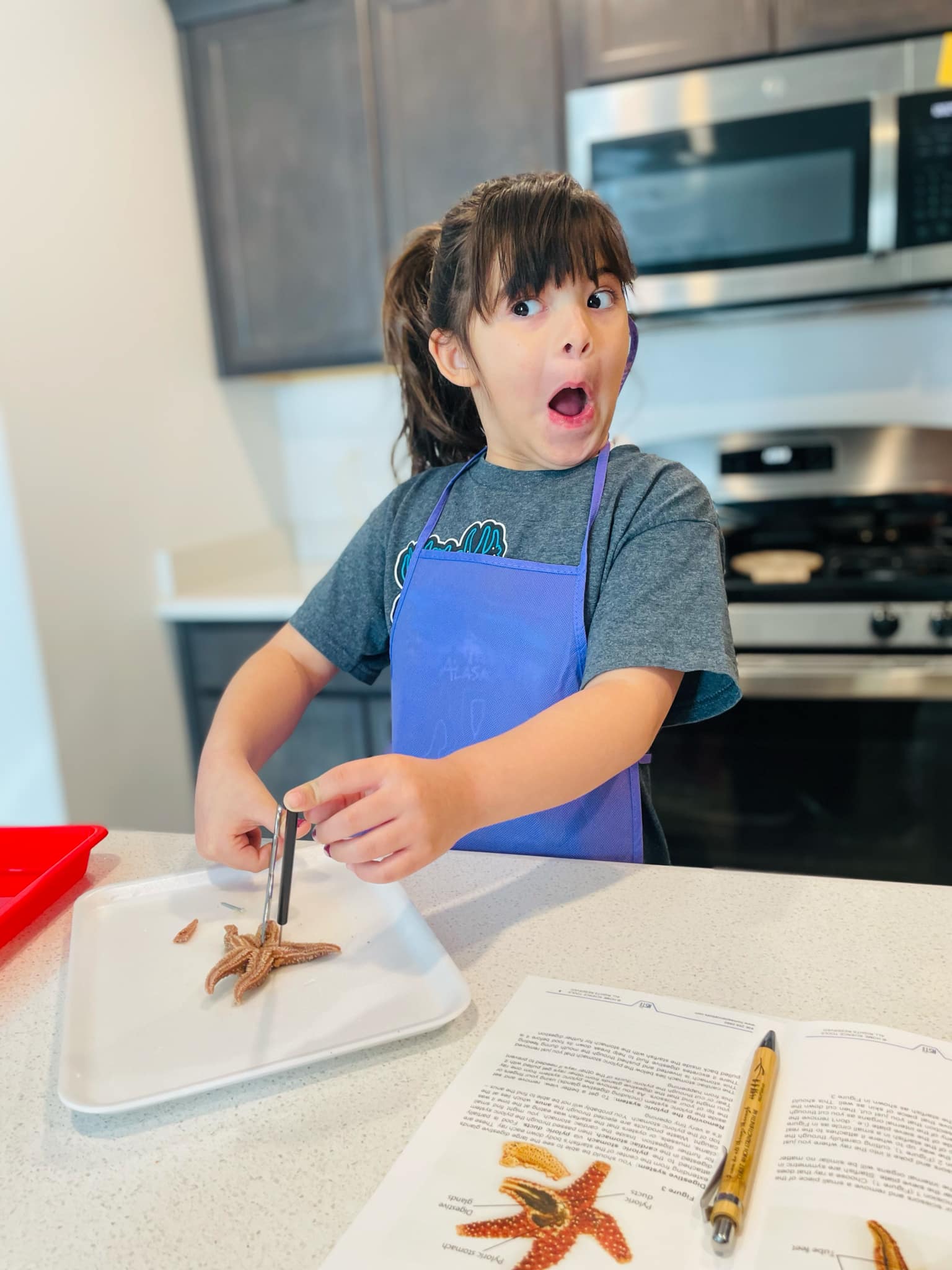
Want to Bring More Wonder Into Your Homeschool?
And as you think about the year ahead, I’d love to invite you to explore Labs of Wonder.
Labs of Wonder was created to help families like yours cultivate wonder in your homeschool through questions, investigation, hands-on exploration, reading, writing, and meaningful conversation.
You do not have to build it all from scratch.
You just need a place to begin.
Explore Labs of Wonder here:
https://www.weirdunsocializedhomeschoolers.com/category/labs-of-wonder/