


Teaching History Through the Amelia Earhart Mystery
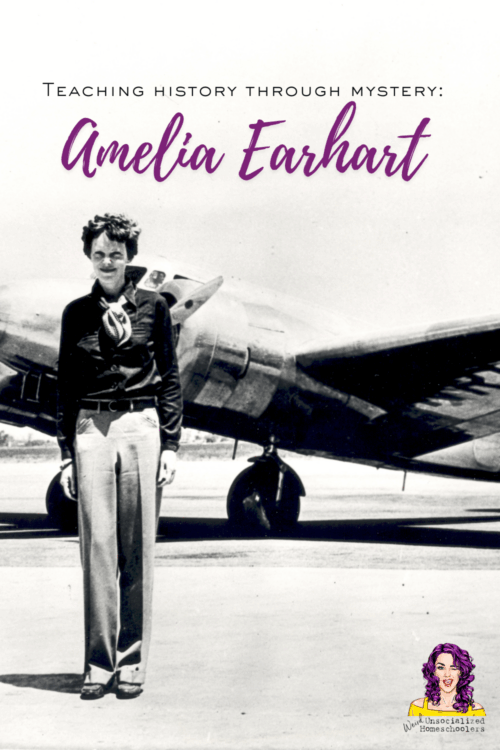
Teaching History Through Mystery: Why the Amelia Earhart Mystery Captivates Young Minds
There is a moment in learning when a child stops asking, “Do I have to do this?” and starts asking, “Wait… what really happened?”
That moment is gold.
It is the difference between covering a subject and owning it. Between memorizing information and pursuing truth. Nothing creates that shift faster than a genuine unsolved mystery. The Amelia Earhart Mystery is not just an aviation story. It is a doorway into curiosity.
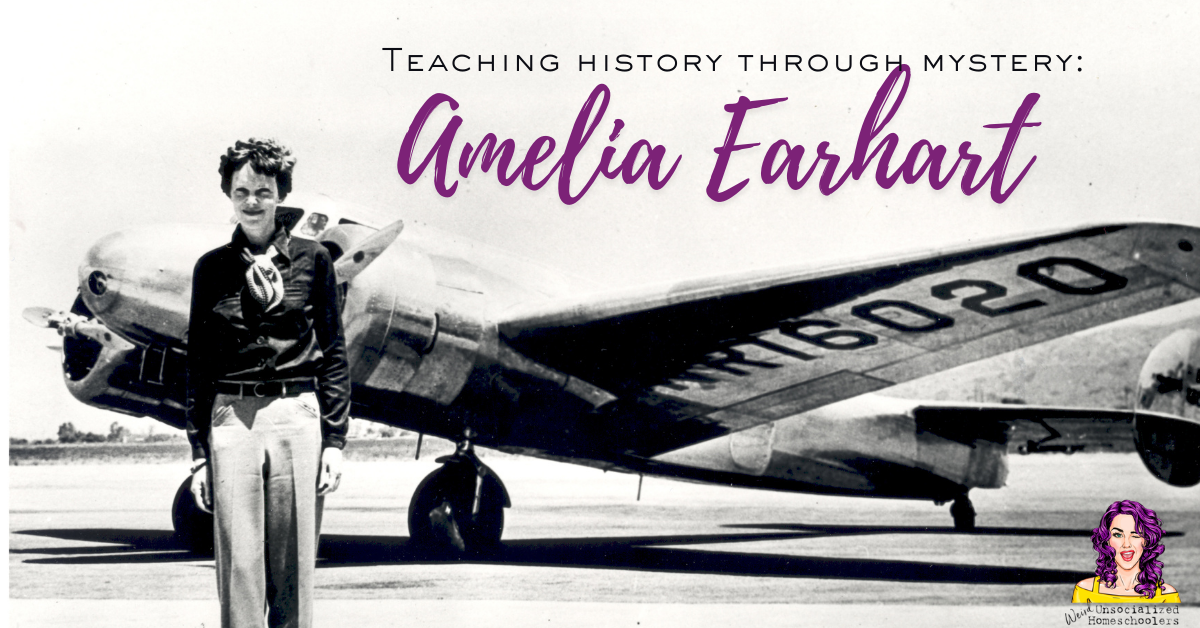
Children instinctively lean toward puzzles. They want a resolution. They want answers. When we present history as settled facts, we close the door too quickly. But when we present history as an investigation, we invite them in.
And suddenly, they are no longer students. They are researchers.
The Power of an Unfinished Story
Most history lessons follow a predictable pattern. Here is the person. Here is what they did. Here is why it mattered. The end.
In reality, most circumstances contain uncertainty, incomplete evidence, conflicting testimony, and human limitations. Through lessons like this, children start to sense something important about learning: knowledge is discovered, not delivered.
The Amelia Earhart Mystery naturally creates this realization. No one can simply hand them the final answer. Even historians and scientists continue to debate theories decades later. That changes the entire posture of learning. Instead of searching for the right answer, they begin searching for the best explanation.
And that requires thinking.
Curiosity Changes the Type of Questions They Ask
When we present a historical figure as information to cover, the questions tend to stay on the surface:
- When was she born?
- What records did she set?
- Where did she fly?
But introduce the Amelia Earhart Mystery, and the questions deepen immediately:
- Could they see the island?
- What would low fuel actually mean?
- Why would radios fail?
- How far could the plane travel under those conditions?
- Which theory fits the evidence best?
Notice what just happened. The subject expanded on its own.
Geography shapes the situation.
Weather influences the outcome.
Technology limits the possibilities.
Human decision-making directs the story.
Without forcing cross-subject learning, your child naturally integrates science, math, engineering, communication, and logic because the problem requires it.
That is real education.
Research Becomes a Tool Instead of a Task
When research is introduced as the collection of information, it naturally becomes a search for something that completes the assignment. But when a mystery enters the picture, research becomes problem-solving.
Now they are not reading to complete an assignment.
They are reading to resolve uncertainty.
They begin weighing sources differently. One article contradicts another. A claim needs support. A theory needs evidence. They start noticing reliability, bias, and plausibility. You can almost see the shift as they move from passive readers to active thinkers… And that is the goal for every single one of my Labs of Wonder Unit Studies. This is how children learn discernment.
They discover that not every explanation carries equal weight and that evidence matters more than repetition.
The Emotional Hook
Facts alone rarely create attachment. Story does.
And mystery is the best story to get your children hooked on learning. The human brain is wired to seek resolution. When an event remains unfinished, the mind keeps working. Children return to the topic voluntarily because they want closure.
They replay possibilities. They revise opinions. They defend conclusions.
This is exactly the kind of engagement we hope for in learning, but cannot manufacture. Intrigue does it naturally.
It invites persistence.
Teaching the Process of Getting to Truth
One of the most valuable outcomes of studying the Amelia Earhart Mystery is not the conclusion your child reaches but how they reach it.
They must gather information.
Compare explanations.
Discard weak reasoning.
Recognize assumptions.
Support claims.
Those are not just academic skills. Those are life skills.
We want our children to grow into adults who do not accept every statement at face value, who understand evidence, and who are comfortable saying, “I need more information before deciding.” Practicing this in a history unit study gives them a safe, engaging place to develop that habit.
The goal is not agreement. The goal is thoughtful reasoning.
Let Them Own the Ending
Perhaps the most important step is restraint. Adults are often tempted to settle the matter at the end. We want to provide the correct answer and close the discussion.
Don’t.
When a child forms and defends a conclusion about the Amelia Earhart Mystery, the topic becomes personal. They remember not only the information but the process they used to reach it. They experience what historians, scientists, and investigators actually do.
And that feeling is powerful. It replaces the idea that knowledge belongs to experts alone with the understanding that truth can be pursued.
Falling in Love With Investigation
The Amelia Earhart Mystery works so well because everything needed is already present. Real people. Real technology. Real environmental conditions. Real limitations. Real uncertainty.
We are not inventing intrigue to motivate learning. We are uncovering the intrigue of a real historical story.
When children discover that subjects hold unanswered questions, they stop seeing education as a checklist. They begin to see it as exploration and approach it with curiosity. BINGO. That is the goal.
And once they experience the satisfaction of piecing together evidence and forming their own understanding, they often want to do it again.
That is the moment curiosity becomes self-sustaining.
Not because we required learning but because we invited investigation.
Some lessons are remembered. Others are experienced.
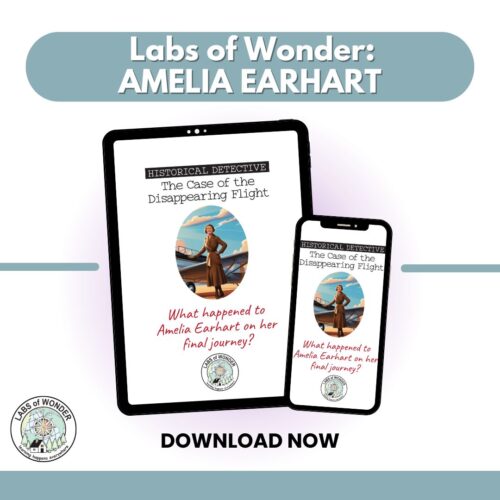
The Amelia Earhart Unit Study lets your child step into the role of investigator and follow the clues themselves. Open the case and let the learning unfold.
Have little ones who want to be involved? Have them create an airplane craft. Click here to download it.