


How to Teach History Without a Textbook: 13 Ideas to Get You Started!

Teach History Without a Textbook
Kids rarely forget a story they have wrestled with. Presidents, wars, and founding ideas were never meant to be memorized. They were arguments, risks, convictions, and decisions made by real people who did not know how things would turn out. What if, instead of just memorizing dates, kids could step inside those decisions, they could discuss why someone chose that, what they believed, and what they would have done; history suddenly becomes more tangible and unforgettable.
If you want to have a little more fun with your history lessons, try these 12 engaging ideas to teach history without a textbook.
Without a doubt, the homeschooling question I hear most often – even more than the socialization one – is, “What curriculum do you use?”
Why? I don’t know. It doesn’t seem like an especially exciting topic. Maybe it’s a conversation starter like the PetSmart cashier I overheard recently. He was asking every customer, “What kind of {fill in the blank with the appropriate species based on the products the customer was purchasing} do you have?”
And, of course, it worked because people love to talk about their babies.

Maybe it’s just the first thing people think of to ask when they’re wondering what in the heck you’ve gotten yourself into.
How do you do this thing called homeschooling?
For nearly 12 years, my answer has always been the same, “We use a hodgepodge of stuff depending on the subject.”
Over the years, we’ve used a variety of resources to cover each subject, but history is by far my favorite when it comes to tossing the textbook! Why? Because there are lots of great ways to teach it that also happen to be enjoyable and easy! Try some (or all!) of these suggestions, and I think you’ll agree with me!
Movies and Documentaries
There are endless educational (and surprisingly entertaining) movies and documentaries out there. If you subscribe to Netflix, Hulu, or Amazon, you’ll find SO many historical movie and documentary choices. Videos make great lazy day (or sick day)!
Timelines
The great thing about history is that it never changes. So, work your way through the significant periods in history with a timeline.
Don’t worry! You don’t have to be super crafty to create a great timeline. It can be as simple as a spiral notebook with dates written at the top of the page. Or a 3-ring binder with dated dividers and notebook paper.
If you want more guidance, there are quite a few workbooks and notebooks on Amazon that will help you, or you can use these resources from Homeschool in the Woods.
Arts & Crafts
Study history through art! Master the masters by studying famous artists in history. Learn about their lives and the eras in which they created their pieces.
- What was Pablo Picasso’s life like? Watch a documentary about him and his art.
- Can you imagine how messy Jackson Pollack’s studio must have been? What experiences in his life led him to his chaotic painting style?
- Which Van Gogh painting is your favorite? You can watch a whole series about his life and art.
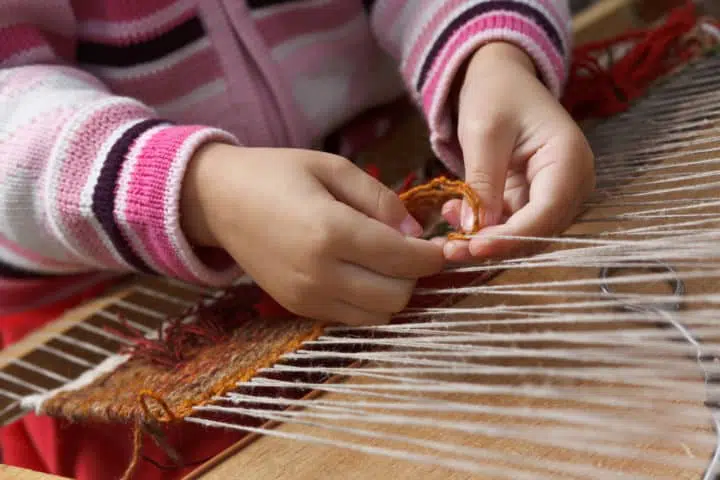
Do some research and learn about historical crafts. You’d be surprised how many hands-on history ideas there are floating around the internet. Need some ideas? Follow my homeschooling history board on Pinterest.
Fashion is one of the easiest ways to make history feel human. When your children look at clothing, they’re really looking at technology, culture, economics, climate, and values all at once (talk about sneaking in education). Examples include:
- A heavy wool medieval tunic reveals a cold world without central heating
- Powdered wigs show social class and politics
- Wartime rationing explains shorter skirts and simpler cuts
- Modern fast fashion reflects industrialization and mass production.
You can open a lesson by examining an outfit, asking: Who could afford this? How was it made? What problems was it solving? Then connect it to the era’s inventions, trade routes, gender roles, or beliefs. Instead of memorizing dates, learners reconstruct daily life, discovering that history is not just a series of events but people making practical choices about how to live in their world.
Historical Fiction
Teaching history through historical fiction is my personal favorite. Is there a better way to learn than by disappearing into a great story and caring deeply about the people living it? Nope!
Dates and timelines tell us what happened, but stories show us how it felt to be there: the fears, loyalties, risks, daily routines, and choices ordinary people faced inside extraordinary moments.
Historical fiction quietly builds context. Children absorb geography when characters travel, economics when families struggle or prosper, culture through food and clothing, and cause-and-effect as events unfold around the characters they love. Instead of memorizing isolated facts, they develop historical intuition, understanding why decisions made sense at the time, even when they look strange from today’s perspective.
One of my favorite authors of historical fiction is G.A. Henty. His books place readers directly into real conflicts and turning points, letting them walk beside young protagonists navigating unfamiliar worlds. Find a true page turner, and kids will not just remember the story, they will remember the era, the attitudes, and the stakes, often without realizing they were learning history at all.

I have to tell you about a new series that is another new favorite. This one has my dog, Rumble, as the lead character! It is written by one of my favorite authors, Jeannie Fulbright. Yes, THAT Jeannie Fulbright of Apologia Elementary Exploring Creation Series! The name of the series is Rumble Tumbles. Here is her first book, but I know for a fact, the second one is finished and will be released soon.
Find a page-turner, and the kids won’t even know they’re learning.
Biographies and Memoirs
Learning about the lives of others, their trials and triumphs, and their struggles and successes can be very inspiring.
What subjects does your child love most? There’s a history lesson there!
- Have a math lover? Read books about famous mathematicians in history.
- Science? How about a biography about Nikola Tesla?
- Art? How did Picasso get started?
The possibilities are endless!
Mystery
One simple way to teach history without a textbook is to introduce mystery.
Instead of presenting every event as settled, begin with the unanswered question. History is full of them. When something remains unresolved, curiosity wakes up.
We have an Amelia Earhart Mystery and it is a perfect example. We know some of the facts of her journey. We know most of the timeline. We know the final radio transmissions. But we do not know exactly what happened. That uncertainty invites investigation.
When you frame history this way, research becomes purposeful. Children consult maps because location matters. They study the weather because it could change the outcome. They evaluate competing theories because evidence matters.
You are not handing them conclusions. You are handing them a case.
And that changes everything.
Field Trips
Get out of the house for history! Visit museums and art exhibits. Be sure to check the events calendar because they will often have exhibits themed around periods in history.
Every town has a historic district. Visit yours!
Go on a longer road trip with Homeschool Travel Adventures! They organize and coordinate educational travel across the United States. They have learned history and geography while rafting down the Rio Grande, hot air ballooning over Albuquerque, spending the night in Fort Niagara, cave crawling in Kentucky, studying marine biology on the beach, doing astronomy at Space Camp, and more!
If you can’t travel right now, though, go on virtual field trips instead! Did you know you can go on virtual field trips to other states, countries, and even the moon? You can! The Ultimate Homeschool Guide to Free Virtual Field Trips includes information about many virtual field trip destinations.
Interviews
If your family is blessed enough to have elders who lived during major historical events, take advantage of that! Have your child interview grandparents or other relatives who are willing to share a story or two about their lives. Listening to those tales is such a special way to spend quality time with a loved one.
Maybe you have an elderly neighbor who could use some company? Perfect interviewee! Ask him or her to break out the photo album and make a day of it.
Audiobooks
Audiobooks are incredibly relaxing. And they are an excellent tool for practicing the art of listening – something we ALL need. I like using audiobooks for history because it’s a subject that’s easy to learn while you listen. And they’re great for fidgety kids! You can get 30 days free with a new subscription!
What can you do while audiobooks play?
- Color or draw about what’s happening as you listen to the book.
- Look up images online from the time period.
- Take notes about highlights that stand out.
- Write down questions about the book, author, or characters that come to mind.
Google Images
Seems like a simple tip, but it’s easy to forget about when you’re pushing your way through endless lessons in a textbook/workbook combo. Why bother with all those boring (often old and cartoonish) images in textbooks when you can look up REAL pictures from the past?
Look up pictures of historical events, famous people, and places. Nothing brings history to life better than actual images of the periods you’re studying (except going to the historical location yourself–which you should do if you can). If you have younger kids that haven’t quite earned the Google image search privilege yet, you can always find pictures ahead of time. Create a PowerPoint slideshow or even print them out to add to your child’s notebook.
Leave space for writing a description of the picture. Bam! You’re notebooking history!
Google Earth
Google Earth is a ridiculously cool geography tool we have at our fingertips. We can see any area of the entire earth whenever we want. What?! What country are you studying right now? Investigate what is happening in that part of the world right now by doing a simple Google Earth search. This activity never gets old. Try it!
Cooking
Food is the real favorite subject in our home!
No matter how crazy our lives get, food seems to be the thing that brings us back together. Everyone is happy when there’s something yummy and fun on the menu. It’s also the number one reason my kids have liked homeschooling throughout the years.
Cooking together is also a great way to bring history into your home. Look up recipes from different countries, regions, or periods in history.
Ancestry/DNA Kits
Learning about your family’s history is a fantastic project and very relevant way to teach history… your family history and how it connects with the bigger history story!
We used ancestry.com. Once your results are complete, the DNA story on their website can be the starting point for a super cool history and geography project, complete with an interactive timeline that shows how your ancestors immigrated to the United States over time. It’s truly fascinating.
There are so many exciting ways to learn history without a textbook. Try some of my favorite resources to get you started!
Some of my favorite picks to teach history without a textbook:
- Eat Your Way Around the World
- Eat Your Way Around the USA
- Big Fat Notebooks
- Short Lessons in World History
- Around the World in 180 Days
Do you tackle history without a textbook? What are some of your favorite resources and activities?

I was just searching for what to use/do for history this school year and this popped up in my email. Perfect! Thanks for all the suggestions.
I am in a History slump! We’ve use a boxed History curriculum since the beginning (8 years) and we need change! Thanks for all the resources and ideas. Even someone 8 years in of Homeschooling needs guidance at times!